

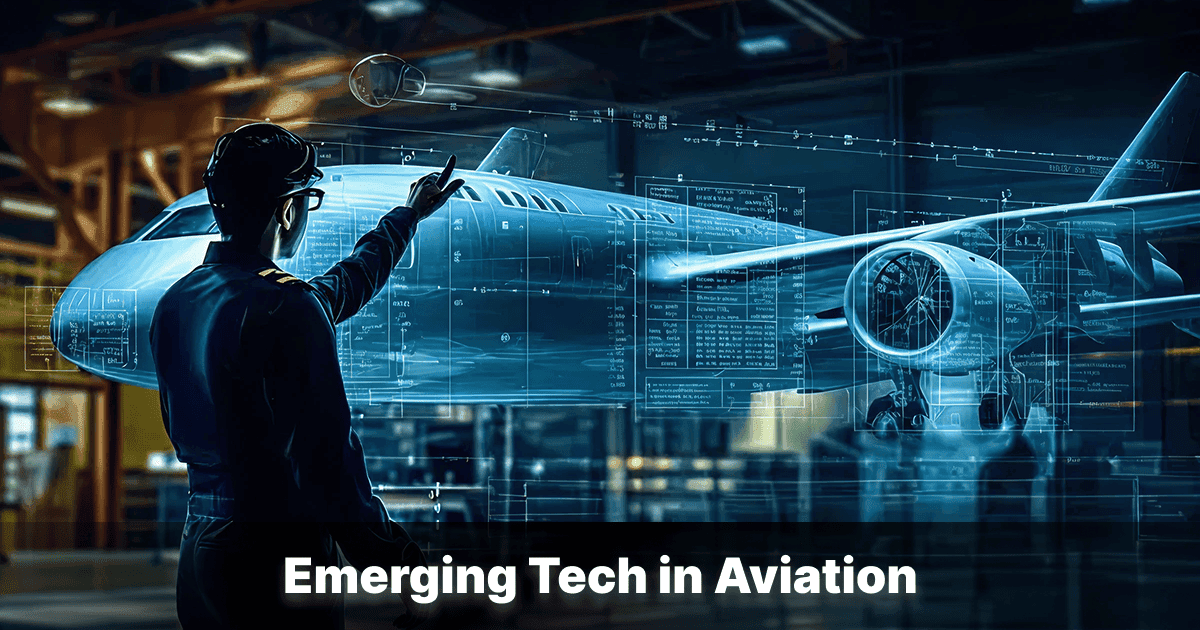
When one of our flights was delayed three hours because a “routine” hydraulic check became a parts scavenger hunt, we did the math. One grounded aircraft. One missed crew rotation. Hundreds of rebooked passengers. Thousands in ripple costs. And the kicker? The flaw was evident in the sensor data stored days before. We just weren’t looking. This is the real problem in the aviation industry today: We have huge amounts of data and yet flying blind.
The most likely response from airlines’ digital teams is to bolt some shiny tools on top of their legacy systems and call it airline digital transformation. That’s the wrong move. Our position is straightforward: As an operating system, and not as a plugin—you can’t apply the predictive analytics banquet with a full IoT tray of food in one hand and claim that you’re solving the Internet of Things (IoT) challenges, because you have to contrast it correctly. Dashboards are cool, sure, but designing around data-driven flight operations is what happens when you’re not stuck with dashboards. It alters everything, from the way planes are worked on to how passengers feel.
Using Data as a Report, Not a Trigger
Here’s what almost everyone gets wrong. They use aviation analytics software to see what has already happened. They then pat themselves on the back. IoT sensors, meanwhile, are screaming in real time drop the above key words naturally into this text - temperature spikes, vibration anomalies, pressure drift, and no one actually is wiring those signals to decisions.
One of the regional carriers we worked with had every engine fully instrumented. The Internet of things (IOT) at its best. But maintenance adherence was still based on time. When asked why, the ops leader shrugged: “That’s just how we do things around here.” A month later, an unplanned engine swap blew their on-time performance for a week. The data predicted it. The process ignored it.
If you really want to employ AI for flight operations, quit thinking of insights as a PDF and start thinking of them as a command.
Our Tooling: The AIR-OPS Loop
We wanted a method to persuade skeptical execs, and thus we’ve developed an easy framework that we rely on across our campaigns: AIR OPS.
A — Acquire: Extract continuous flows from iot technology, not forced batch uploads.
I — Interpret: Go with predictive maintenance models, not threshold alerts.
R — React: Respond with operational change in real time.
O — Optimize: Provide results to improve the model.
P — Personalize: Customize actions to specific aircraft, routes and crews.
S — Scale: Roll across the airline industry without bones breaking.
This loop is what makes aviation technology solutions a competitive weapon.
Predictive Maintenance Isn’t Jargon but Rather a Tool for Survival
We applied the predictive maintenance to a fleet of A320 for mid-size airline. Plotting vibration data against historical failures, we identified three components otherwise heading for failure within 72 hours. Maintenance changed them on their usual ground time. Zero delays. Zero AOG events. That one change alone financed the roll out of IoT in aviation within six months.
This isn’t about futuristic AI. It’s about applying aviation analytics software to stop pretending parts fail on a schedule. Aircraft maintenance must be condition-based, not calendar-based. When you enable iot sensors to make decisions, It’s not just about enhancing safety, it’s also about safeguarding revenue.
If your maintenance team is still ahead of the game with spreadsheets, they’re leaving money on the runway.
Real-Time Flight Operations are the New Control Tower
A thunderstorm cell appears over Denver. Traditionally, the dispatchers manually reroute, wasting more fuel in a frustrating cycle. Plugged into IoT itself within aviation, AI for flight operations was processing real-time data like weather and position of the aircraft, fuel burn etc., and it then fed these into a predictive model. It recommended small tweaks to speed and altitude. Result: two-minute wait instead of 20 minutes. Take that to scale and you have a structural advantage.
It’s the point at which airline operations truly begin running on data. It’s not about flashy apps. It is trying to do real-time insert above key words in the text: decisions and edits that come not over shifts, but over seconds.
“It feels like cheating,” one ops manager said. He wasn’t wrong. When algorithms outsmart humans at scale, you win.
Passenger Experience is an Operations Challenge
Everyone talks about making passenger’s experience better with nicer apps and lounges. That’s lipstick. The true passenger experience is: Did the plane depart on time? Did their bag make it? Did they get stranded at an airport tarmac?
We connected gate sensors, baggage IoT sensors and crew scheduling data. When a delayed inbound flight is at risk of missed connection, the system auto-prioritizes bag loading and delays a connecting flight by four minutes. Eighty-seven passengers made their connection. That’s airlines digital done right.
This is also when aviation technology solutions cease being IT projects and begin to be brand strategy.
If you’re not telling CX about ops, you’re optimizing the wrong layer.
Legacy Systems are the Silent Assassins
Well, let’s at least address the elephant in the hangar. Legacy systems. They’re common to everyone in the airline industry. They’re fragile, siloed, and react to today’s IoT tech like it’s an allergen.
We hugged an old 20 year maintenance system with a baby API layer. All of a sudden, iot sensors could trigger alerts that dropped straight into work orders. No forklift replacement. No two-year ERP nightmare. Just progress.
This is how you execute airline digital transformation without blowing up the org. You don’t rip and replace. You orchestrate.
The CIO wanted a $ 10M modernization initiative. Instead, we would have shipped a $500K integration. He paid for our coffee for a month.
Data Without Accountability Is No More Than Theatrics
And here is the uncomfortable truth: 85% of aviation analytics software deployments fail because no one owns the result.
We create a predictive model to reduce fuel consumption. It worked. Then the dispatch was disregarded because “the captain didn’t want to take that suggestion.” Fuel savings goes in vain.
So, we made a simple rule: if that system flags something saving 3% efficiency and it’s not acted on, someone has to log why. Suddenly, adoption jumped. Accountability beats dashboards.
This is how you translate large volumes of data into action.
Where IoT and AI Really Pay Off
If you’re not sure where to begin, here’s our hit list:
- Predictive maintenance for high-failure components
- Operations in flight - in air weather and fuel optimization
- Turnaround time optimization with gate and baggage sensors
- Predictive delay model based crew scheduling
The Operator’s Reality Check
We’re not ignorant about this. IoT in aviation is perplexing. Data quality sucks. Change management is brutal. Pilots don’t trust black boxes. Maintenance teams hate new workflows.
“We probably had a chief mechanic say, ‘I don’t need a robot to tell me my job,’ ” he said. Six months later, he was the most outspoken proponent after it caught a failure that eluded him.
This is the work. If you’re not prepared for digital aviation transformation, don’t begin.